

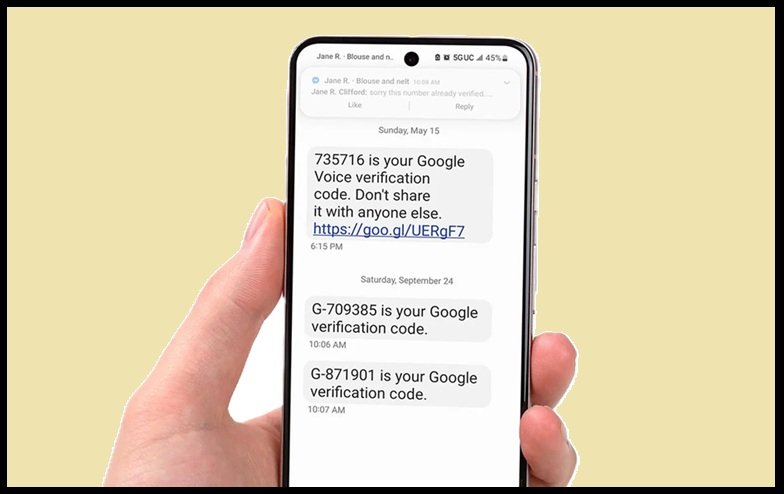

A link verification code text message is a protection message containing a short code. This is used to verify your identity, mobile phone number, account, login, or online transaction. If you receive a verification code when you did not request one, it could be perplexing and, every so often, concerning.
Commonly, a surprising verification code can arise because someone entered your phone number incorrectly. It can also show up at the same time as you are signing in from a modern device, starting a checkout, enhancing an account, or having access to a provider that uses SMS verification.
What Is a Link Verification Code Text?
A hyperlink verification code text is an SMS containing a one-time protection code. The code is typically sent to your registered mobile phone number to verify that you have the right to access that account.
Verification codes are usually used for:
- Account login
- New-device verification
- Password restoration
- Account registration
- Payment verification
- Online checkout
- Security settings
- Two-element authentication
- Identity verification
A normal message can furthermore say something like:
Your verification code is 123456. Do not share this code with anyone.
The unique wording and quantity of digits can vary, depending on the corporation and provider.
Why Did I Receive a Link Verification Code Text?
There are numerous possible motives for receiving a verification code.
1. You Requested the Code
The only rationalization is that you recently tried to log in, make a purchase, create an account, or verify your smartphone number.
If you initiated the motion yourself, the code is usually a part of the normal safety process.
2. Someone Entered Your Phone Number by way of the use of Mistake
An Adden code does not necessarily mean that your account has been hacked.
Someone may also have been getting into their personal cellphone number and, by a twist of fate, typed yours. This can cause the verification machine to ship a code to your telephone.
This is one of the commonplace motives for an unexpected Link verification message.
3. Someone Is Trying to Access an Account
Another possibility is that a person is attempting to check in to an account related to your cellphone range.
If you again and again get a series of codes that you did not request, pay attention to the state of affairs. Check the applicable account through its official app or website and review recent login or security activity.
4. You Are Using a New Device
Some services deliver verification codes while you log in from a new mobile phone, computer, browser, or location.
This is designed to make sure that the person looking to get proper access to the account also controls the registered cellphone number.
5. You Started an Online Checkout
Some payment services use verification codes during the checkout process. For example, Stripe’s Link service can use SMS or email verification whilst clients get proper access to Link on a brand new internet site or tool.
Does a Link Verification Code Mean My Account Was Hacked?
No, not always.
Receiving a verification code, by itself, does not show that your account has been hacked.
There may be numerous innocent motives for receiving the message, which include a typing mistake or a valid verification request that you forgot about.
However, a suspicious code must not be ignored if it appears repeatedly or is determined by someone asking you for the code.
The safest technique is to leave the number unused and independently take a look at the applicable account.
Is a Link Verification Code Text a Scam?
A verification code itself isn’t always necessarily a rip-off.
The threat generally comes from what takes place after the code is dispatched.
For instance, a person might also approach you and say:
- “I thru risk entered your quantity.”
- “Please send me the code.”
- “I am from customer support.”
- “Your fee desires to be cancelled.”
- “Your account may be blocked.”
- “Send the code so I can verify your account.”
These requests should be treated as suspicious.
A legitimate security code is meant for the account holder to enter into the legitimate service that initiated the verification. You ought not to deliver the code to anyone.
What Should You Do If You Did Not Request the Code?
If you received a surprising verification code, examine the following steps.
Step 1: Do Not Share the Code
Do not supply the code to anyone.
Do not look at it on the smartphone.
Do not deliver a screenshot containing the code.
Step 2: Do Not Click Suspicious Links
If the message consists of a link that you did not anticipate, keep away from putting in place it.
Instead, open the relevant employer independently through its superb app or internet site.
Step 3: Check Your Account
If you understand which provider despatched the message, test in independently and test your cutting-edge hobby, login information, devices, and protection settings.
Step 4: Change Your Password if Necessary
If you discover an unusual login attempt, changing your password can be a useful precaution.
Use a strong, unique password that you do not use on other internet websites.
Step 5: Enable Stronger Security
Where possible, keep in mind the use of an authenticator app or passkey in place of SMS verification.
What Is the Difference Between a Verification Code and a Verification Link?
A verification code is normally a brief numeric or text string that you enter properly into a website.
A verification link is a clickable URL that opens a verification internet web page.
For example:
Verification code:
482913
Verification link:
A net address that opens an internet page wherein your account or identification may be tested.
Both techniques may be used to affirm ownership of an account or contact information.
How Long Does a Verification Code Last?
Verification codes are normally transient.
Many offerings cause them to expire after a short duration. Once a code expires, it commonly can’t be used for the genuine verification request.
The particular expiration time is predicated on the issuer that despatched the message.
If you request a current code, the preceding code can also end up invalid.
Can Someone Access My Account Without the Verification Code?
That depends on the protection tool being used.
A verification code is designed to provide a further safety layer. If an attacker knows your password but does not have the right of entry to enter your verification code, the additional verification step may also prevent the login from being completed.
However, safety codes should not be the only protection for an account.
Using a strong password, enabling two-factor authentication, protecting your email account, and using passkeys, if available, can provide additional safety.
Why Do I Keep Getting Verification Codes?
If you again and again get messages with codes that you did not request, there are several possible reasons.
Someone should again and again be coming into your cellphone large variety via mistake. Alternatively, someone may be trying to gain access to an account related to your phone number.
Repeated surprising codes deserve greater interest than a unmarried isolated message.
Check the carrier’s account history and protection settings. If you discover something suspicious, change your password and secure your account.
Should I Reply to a Verification Code Text?
Usually, there is no motive to reply to a security code message.
If you in all likelihood did not request the code, truly delete it unused.
Do not reply to someone who contacts you inquiring about the code.
For promotional messages, opt-out commands may be available, but protection messages are different from normal advertising texts.
Can I Delete the Verification Code Text?
Yes.
If you probably did not request the code and no longer want it, you could delete the message.
However, if you agree with a person is making an attempt to get proper of access for your account, it is higher to test the account’s safety interest in advance than actually ignoring repeated messages.
What If Someone Calls Me After Sending a Verification Code?
Be mainly cautious.
A common social-engineering approach is for a person to propose a valid verification code, after which they contact the recipient pretending to be customer service.
They can also ask you to read the code aloud.
Do not deliver the code.
Instead, give up the verbal exchange and get in touch with the organisation via a method you independently confirm.
Link Verification Code Text vs OTP
The phrases verification code and OTP are often used interchangeably.
OTP approach: One-Time Password.
An OTP is typically:
- Temporary
- Single-use
- Sent via SMS, email, or an authentication software
- Used to confirm identification
- Invalid after expiration or a single use
A link verification code can consequently be considered a kind of one-time verification code, depending on the company concerned.
Common Reasons for an Unexpected Verification Code
SituationPossible ExplanationYou asked a login codeNormal account verificationYou commenced checkoutPayment or identity verificationYou changed devicesNew-tool protection checkSomeone entered your numberPossible typing mistakeYou forgot about an vintage accountPrevious account activityYou receive repeated codesPossible repeated login attemptsSomeone asks for the codePotential social-engineering scamMessage includes a suspicious linkPossible phishing strive.
How to Protect Yourself From Verification Code Scams
Protecting your verification codes is a critical part of online protection.
Use Unique Passwords
Avoid the use of the same password on more than one site
If one internet website suffers a data breach, reused passwords can put yoyouroney owed at risk.
Enable Two-Factor Authentication
Two-factor authentication provides an additional safety layer beyond your password.
Use Passkeys When Available
Passkeys can provide a robust alternative to standard password and SMS-based authentication.
Keep Your Phone Secure
Use a PIN, fingerprint, or facial recognition to prevent unauthorized access to your cellphone.
Protect Your Email Account
Your email account may be especially important due to the fact that many services use electronic mail for password recovery.
Use a robust password and, in addition, security protection for your e-mail.
Frequently Asked Questions
What is a hyperlink verification code textual content?
A link verification code text is a security message containing a temporary code used to confirm a phone number, identity, account login, checkout, or other protection movement.
Why did I get a hyperlink verification code as soon as I did no longer request one?
It also can take region due to the truth someone entered your smartphone massive range incorrectly, a issuer brought approximately verification, or a person attempted to get right of get right of entry to to an account related to your amount.
Is a link verification code text unstable?
The code itself isn’t usually risky. The primary hazard is sharing the code with some other man or woman or entering it into a fraudulent website.
Should I provide my verification code to customer support?
No. Do not deliver a one-time verification code to an unexpected caller, text message sender, client, provider, or intended assistant consultant.
Can someone hack my telephone with a verification code?
Receiving a verification code does not, by itself, indicate that your telephone has been hacked. However, by no means share the code because it could be used as part of an authentication method.
What oughtI toI do if I collect a couple of verification codes?
If you in all likelihood did not request them, do not use or provide them. Check the applicable account independently and compare the current security interest.
Does receiving a verification code suggest a person has my password?
Not commonly. A code can be sent for numerous reasons, such as a wrong phone number or a legitimate verification request.
Can I ignore a sudden verification code?
If you probably did not request it and there is no specific suspicious activity, you could leave it unused. If the messages are otherwise about a surprising account hobby, check out the account’s protection settings.
Final Thoughts
A hyperlink verification code text is generally a protection mechanism designed to affirm that the individual attempting an action has the right of access to a specific cellular smartphone range or account.
Receiving one all at once no longer mechanically suggests that your account has been hacked. It can also want to in truth be a mistake, a forgotten verification request, or some other ordinary protection event.
Leave a Reply